
Heat Pump vs. Gas Furnace: The Physics of Las Vegas Winters.
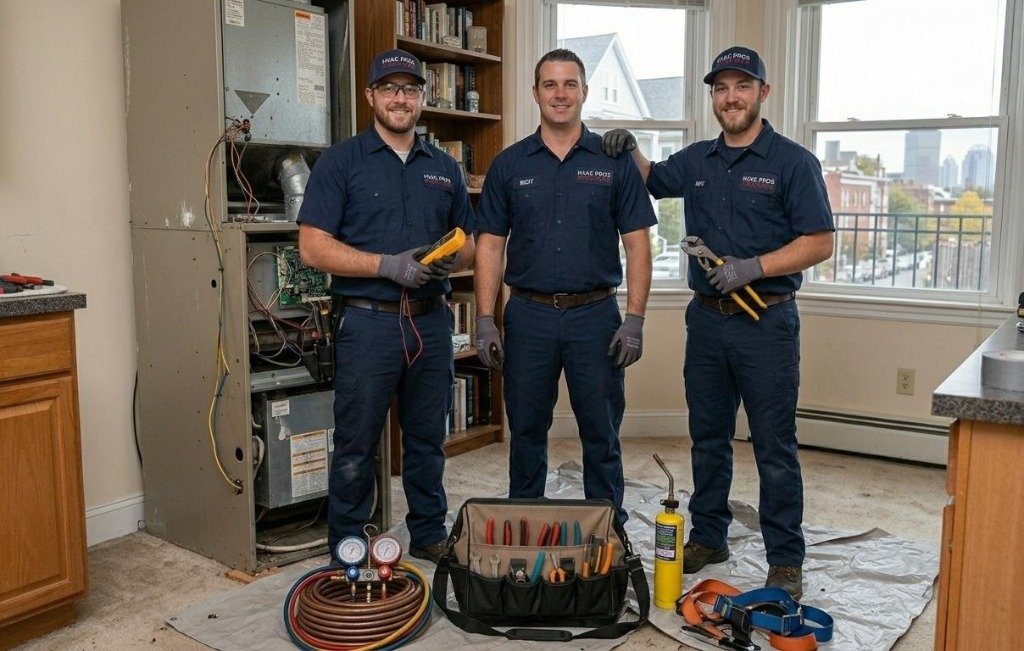 By Dylan Turner, Founder • 17 Min Read
 While Las Vegas is known for its extreme heat, our winters bring temperatures that challenge the most robust heating systems. At Hvac Pros Las Vegas, we apply **Mechanical Efficiency Metrics** to help homeowners choose between the 'Steady Move' of a heat pump and the 'Raw Combustion' of a gas furnace. Choosing the right system requires a deep understanding of COP vs. AFUE in the Southern Nevada climate.
COP: The Coefficient of Performance
A heat pump doesn't "create" heat; it moves it. Even when it's 35°F in Summerlin, there is still thermal energy in the outdoor air. The heat pump extracts this energy using the reverse refrigeration cycle. The efficiency of this process is measured by the **COP**. A COP of 3.0 means that for every 1 watt of electricity used, the system provides 3 watts worth of heat. This makes heat pumps theoretically the most efficient heating option. However, as the temperature drops toward freezing, the 'Vapor Density' of the outdoor refrigerant decreases, and the COP falls. In Las Vegas, where our winters are relatively mild, a high-efficiency heat pump can maintain a COP of over 2.5 for 95% of the season, making it a powerful contender for low-cost winter comfort.
AFUE: The Annual Fuel Utilization Efficiency
A gas furnace operates on the principle of combustion. The AFUE rating tells you what percentage of the natural gas is converted into usable heat for your home. A 95% AFUE furnace is incredibly efficient at converting fuel, but it is limited by the chemistry of the flame—it can never create more energy than the fuel provides. In contrast to the heat pump's COP (which can be 300% efficient), a furnace is always capped at its AFUE (max ~98%). However, gas furnaces provide a higher 'Discharge Air Temperature'—delivering 120°F air to the vents, which provides that "cozy" feeling that many Las Vegas homeowners prefer over the "lukewarm" 95°F air delivered by standard heat pumps.
The Physics of Heat Transfer Surfaces
The biggest difference between the two systems lies in the heat exchanger. A gas furnace uses a stainless steel or aluminized steel 'Shell' that is heated by a flame. This creates intense thermal stress. Every time the system starts, the metal expands; when it stops, it contracts. This 'Thermal Cycling' eventually leads to stress-cracks, which are a major safety hazard (Carbon Monoxide). Heat pumps, however, use a 'Coil' heat exchanger, similar to an AC. This coil operates at much lower temperatures, meaning it experiences far less 'Expansion Fatigue' over its lifespan. Dylan Turner’s team utilizes **Ultrasonic Flaw Detection** to audit furnace heat exchangers, ensuring your family's safety against invisible stress-cracks.
Defrost Cycles and Energy Penalties
In a Las Vegas winter, humidity can occasionally settle on a heat pump's outdoor coils and freeze. To clear this ice, the system must temporarily enter 'Defrost Mode'—effectively running the AC in reverse to melt the ice. During this cycle, the system often engages 'Electric Heat Strips' to avoid blowing cold air into the home. These heat strips are 'Resistance Heat' and have a COP of exactly 1.0 (the most expensive way to heat a home). We optimize your heat pump's **Defrost Logic** to ensure it only runs when absolutely necessary, minimizing the use of expensive auxiliary heat and maximizing your winter ROI.
Dual-Fuel: The Mechanical Synergy
For the ultimate Las Vegas setup, Dylan Turner often recommends a **Dual-Fuel Hybrid System**. This combines an electric heat pump with a gas furnace backup. The 'Control Logic' switches between the two based on the outdoor temperature. When it's 50°F, the heat pump runs at a high COP, saving you money. When a cold front drops the temperature to 30°F, the system switches to the gas furnace for raw heating power and comfort. This is clinical mechanical management—using the right tool for the specific thermal condition.
The Dylan Turner Winter Audit
Whether you have a furnace or a heat pump, the 'Seasonal Transition' is when mechanical failures occur. Our audit includes a 'Combustion Analysis' for gas systems to ensure zero CO leakage and a 'Refrigerant Charge Verification' for heat pumps to ensure maximum winter COP. We don't just "turn it on"; we verify the physics of the heat exchange. Trust Hvac Pros Las Vegas to provide the authority on winter comfort. We apply clinical engineering to keep your home warm and your bills low, regardless of the fuel source.
Mechanical ROI and Fuel Stability
Choosing between gas and electric is also a choice of fuel-market stability. As the grid in Southern Nevada evolves, the ROI of these systems shifts. We provide 'Fuel-Cost Projection Models' to help our clients make informed decisions about their next system replacement. At Hvac Pros Las Vegas, we aren't just fixers; we are advisors on the long-term value of your home's mechanical assets. Trust the authority of Dylan Turner to navigate the physics of the Las Vegas winter. We keep your property safe, efficient, and comfortable year-round.
Is Your Heating System Ready for the Cold?
Don't wait for a January freeze-out. Schedule a clinical heating audit today and secure your winter comfort.
RESTORE HEATING INTEGRITY